
Defining Fair
How Do You Live Together in Such a Small Space

“How did the two of you live together in such a small space?” a potential voyager asked me a few days ago. This is not the first time I’ve heard this question. In fact, it sits right next to “how do you handle storms at sea,” on my list of the top ten questions cruisers ask me.
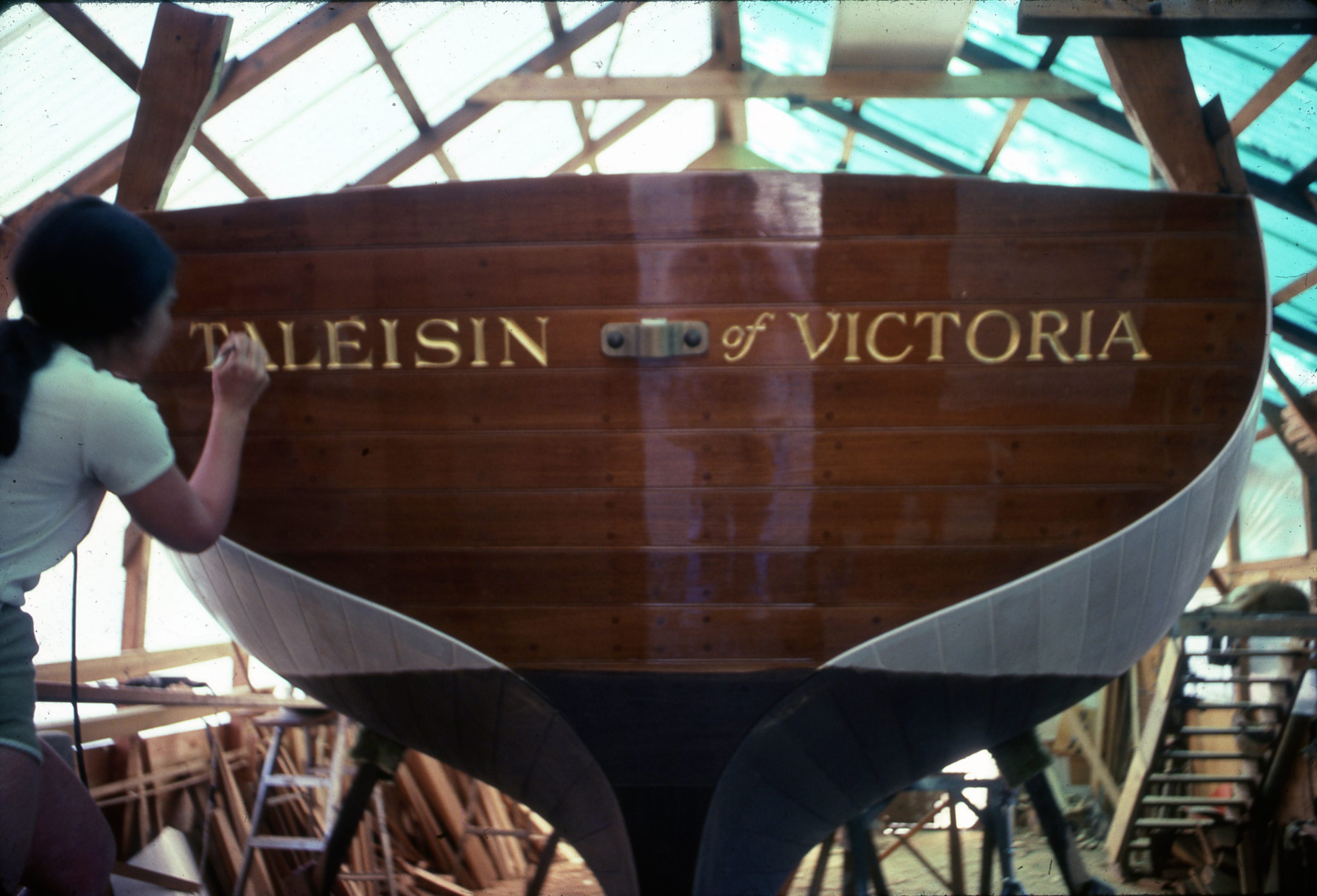
It took a whole book to answer the stormy question. But it took just one chapter to answer the personal one. That is chapter 23 – Defining Fair - from Bull Canyon: A Boatbuilder, a Writer and Other Wildlife. I wrote this book to share the adventures Larry and I had as we spent 3 years building 29-foot Taleisin in an isolated canyon in the mountains of Southern California. Even though we were on land, we had to overcome some of the same relationship problems that happen when you set off together in a small boat. I think the following shows our solutions. I hope you enjoy meeting a few of the characters we came across in the canyon as you meander through this chapter.
“You guys got a match? Can’t find my damned cigarette lighter,” Jo Caphart called as she flung open the door of the boatshed. “How about that cool drink you’ve been promising me?
”
I was brushing the first coat of varnish onto the newly finished cabinsides of the boat. The hum of the air conditioner and the blare of the radio had masked any sounds of Jo’s arrival. This was the first time she had come for a casual visit. Her only other visits had been when she signed the paperwork necessary to run first telephone, then electric cables, to her trailer at the crossroads north of us. So Jo’s midafternoon drop-in was completely unexpected.
“Why don’t you show Jo the boat, I’ll get some cold drinks,” Larry called from the back corner of the shed where he was assembling framework for a hatch. This was not his usual reaction to unexpected daytime interruptions. So I knew he, too, had been caught off guard.
“How about adding something to spice up that drink?” Jo called as he left. She climbed the ladder and took a perfunctory look at the boat, and then climbed back down to march determinedly toward the cottage.
Larry had a pitcher of iced lemonade and a bottle of rum waiting. At Jo’s direction he poured an almost equal amount of both into a tall glass, then he lit yet another of her endless chain of cigarettes. When he added a generous splash of rum to his own lemonade I began to suspect Jo’s visit was only part of the reason Larry had so willingly put aside his work. I pushed my concerns to the back of my mind, determined to enjoy the break in routine, the chance to review the canyon utilities fight with another satisfied participant now that distance let the humorous moments shine through. More than an hour slid by greased with laughter and rum when suddenly Jo looked at her watch. “Mind if I use your telephone. I’d better call for a tow truck before closing time.”
“Engine problems? I can drive up and take a look,” Larry offered.
“Engine’s fine. No need to drive anywhere. Car’s a couple hundred yards up the road. I was headed to town. Missed the corner. Car’s upside down in the stream. Lighter’s somewhere in there, but I couldn’t find it. Perfect excuse to finally stop in and have a drink with you two.”
By the time Jo’s abused car was pulled out of the stream, turned upright and hauled off down hill, I had lost my usual sense of determination. “Let’s clean up then go in to town and find something for dinner. Haven’t been to the Pantry Café in months,” I suggested.
“Good idea,” Larry agreed. “I’ve been wanting to make an appointment with you. I think we’ve got to do some serious talking.”
From the day we decided to live together, Larry and I found we rarely quarreled. The few disagreements we had tended to be quickly settled through a small act of diplomacy by one or the other of us. Then about a year after we met, a seemingly major argument did sneak into our lives. It was sparked by a disagreement that had lain smoldering and unspoken until it threatened to tear asunder the relationship we both hoped could work long-term for us. We weathered that storm but in its wake realized we needed to create some guidelines for discussing future differences. We’d spent several evenings refining these rules. Then in an act we both saw as the first true commitment we’d made to each other, we wrote them down
:
Rule 1 — If you have something bothering you, don’t hold it in and don’t explode. Instead, make a definite appointment to discuss it. That way the other person knows whatever you want to discuss is really important to you.
Rule 2 — Arrange for the meeting to take place in a neutral spot, not right at home. If possible have the spot be free of outside distractions.
Rule 3 — Only the person who calls the meeting has the right to bring up their grievances. No rebutting, no bringing up complaints, this is the instigator’s chance to point out problems and ask for solutions.
Rule 4 — If one or the other feels like walking out and slamming the door, you can only stay away for five minutes then you have to come back, listen and ask questions until you truly understand what is bothering your partner.
Rule 5 — Never say, “You always…”
Rule 6 — Never say, “You never…”
Through the years these rules had led to occasional hours-long, sometimes tear-laden discussions in back corners of cafés, on secluded stretches of beach. One time when we were sailing offshore with the nearest land at least a thousand miles away, I remember living up to the spirit of the rules by inviting Larry to meet me on the foredeck of the boat at cocktail time. Even though the foredeck was only a dozen feet away from where we spent the majority of our time at sea, it did represent a neutral place. The somewhat formal invitation to meet gave both of us time to think about our life together before we sat down to talk. Through the years, we have learned the frustrations that led to problems between us almost always came about because of outside pressures — being tied up in some foreign port while we waited for weather to change, getting caught up in family problems, writing deadlines, too many visitors or most often, having to wait for someone else to make a decision before we could get on with our own plans. Now as I changed into non-boatyard clothes and fed Cindy, I mentally added the afternoon-long interruption of Jo’s unexpected appearance to the list of things that had not gone to plan over the past weeks.
I thought back to those moments when I’d tried to ignore the explosive cursing that came from the boatshed far more often than normal. Normal was, an occasional curse when a nut slipped free and skittered into the bilges of the boat, or a string of swear words over a skinned knuckle, a bruised shin or any of the small mishaps that are part and parcel of working around timber, scaffolding and machinery. But recently Larry’s work had not been going smoothly. Small mishaps like finding a flaw in a piece of timber he’d saved for a special purpose, or breaking off a screw as he twisted it into place, seemed to provoke angry reactions that stalled his production for an hour at a time. Larger mishaps, ones he’d normally have taken an hour or two to get over, now sent him into an all-day spin. I’d heard the sound of a large piece of timber snapping apart one morning, followed by his angry shouts. Minutes later Larry came stomping into the house and poured himself a shot of whiskey. I knew he’d spent three days shaping a long strake of very expensive, difficult to replace teak timber to fit along the outside of the hull as a protective rubbing rail. He’d gone out just after breakfast that morning to finally fasten it in place. It had broken and no amount of sympathy from me seemed to help. He spent the rest of that day laying in the back room reading a book. By the next day he’d decided to take a different tack, using oak, which is far more flexible than teak and progress resumed. Then a few days later, as he worked methodically to bend one of the very expensive bronze chainplates so it would lay neatly in place, a casting flaw appeared, one that rendered the chainplate useless. His reaction was to throw the offending metal through the plastic window of the boatshed before once again stomping into the kitchen and grabbing the whiskey bottle.
Though I had been feeling quite good about my time in the boatyard, my mornings at my desk had not been flowing smoothly. Like many — maybe even most — writers who manage to get a book published, I wanted to write a novel. “That will prove I am a ‘real’ writer,” I’d said during one of our leisurely weekends with Shearlane and Robert Duke the previous winter. Shearlane had agreed wholeheartedly since she too was infected with “novelitis.” We’d spent the rest of the evening and much of the next morning in a roundtable discussion of the story I might someday write, based like most of my favorite novels, on a true event.
Five years previously, when we had been voyaging across the Indian Ocean, we made our landfall in Galle, on the southern tip of Sri Lanka. There we had a strange, in fact, disturbing, encounter with the owner of a Canadian-flagged, 50-foot yacht called Crusader. Don Sorte definitely was the most audacious, rude, often unscrupulous, sometimes exceptionally brave person we had ever met. Hard-hat, deep-sea diver, small-time con artist, adventurer, underwater rescue expert and co-inventor of the very first successful miniature submarine. Unfortunately, he was not a good seaman. Our lives became intertwined when his yacht went down during a massive cyclone, taking not only Don’s life but those of five young backpackers who paid to sail with him across the Bay of Bengal. We weathered the same extreme conditions and came through relatively unscathed, but we were on a more seaworthy vessel. When we sailed in to Malaysia, we’d been caught up in the search efforts launched after Sorte’s last radio call. The aftermath of his story continued to intrude in our lives long after official searches were called off. Over the next five years, we received letters and visits from families of the missing youngsters, from vendors in Canada who received deposits to help outfit Sorte’s boat but never had their final bills fully paid. We even were contacted by the CIA, as it appears Don was suspected of selling highly classified submarine design information to the Soviet Union. We were questioned about reported — but never confirmed — sightings of the yacht in the highly restricted waters of the Soviet-influenced Andaman Islands two years after the event.
“I think Larry is right,” Shearlane said when she climbed into the car to leave. “You could make a great novel out of that story. It’s time you tried something new, something really challenging.”
The morning after Shearlane and Robert’s visit, Larry woke with yet another list of motives, character interactions and intrigues that could be added to the potential novel. Over the next weeks, instead of playing the guitar to while away the last moments of each day, Larry and I played with ideas to add to the notepad labeled, “Crusader Novel.”
“Why don’t you make a bet on yourself?” Larry had suggested when the first half of his boatbuilding book advance arrived. “Now we’ve got enough cash to pay for the materials to finish the boat, why not take ten or fifteen percent of the money we got from selling Seraffyn and use it to live on for the next six months. That way you can forget about sailing articles and spend your mornings writing that novel.” At first his faith in my skills, his sheer pleasure as each evening I read my day’s work aloud, had been heartwarming and inspiring. At first I was truly excited to explore this completely new mental territory, especially when I sent the first three chapters and my rough outline to Eric at W.W. Norton and got an encouraging letter back saying, “Could be a real ripper, get on with it. Let me see another four or five chapters and I might be able to send you an advance.” But as the weeks passed, my imagination began to yield fewer and fewer words, and my outline became ever more like a pair of shackles than a guiding light. I blamed Larry’s recent bouts of boiling frustration for
my slowly dwindling writing production.
I also blamed Jimmie Moore for distracting me further from my work by what I saw as a continued assault on the cash that remained from selling Seraffyn. “Land — if I had any spare cash I’d be buying all the land I could around here. It’ll never be cheaper,” he’d kept telling us. “People are desperate to sell. You can name your price. Banks don’t have any money to loan, you’ve got cash to put deposits down. Inflation is just eating up everything you get from CDs. Land is inflation-proof.”
Jimmie’s advice echoed the headlines that filled the newspapers and radio talk shows. It was 1982 and President Reagan was fighting to pull the U.S. out of its deepest recession since the 1930s. Inflation in the U.S. was running at 11 percent a year. “For Sale” signs were popping up everywhere, proclaiming, “owner financing available.” At the same time there were reports of banks and savings and loan companies failing in alarming numbers as interests rates topped 20 percent even for the most secure of loans. So each time Larry suggested we take a look at some of the land for sale around the lake I felt my stomach knot up. I’d try to deter his interest by reminding him about the increasing number of people who were late on mortgage payments for homes Jimmie and Barbara had built and financed.
That evening as we drove down toward the valley, both of us were lost in contemplation. We chose the quietest corner of the café and ordered our meal. Then the silence settled so darkly around us I began to fear I’d somehow missed a fissure that had now grown into a potentially unbridgeable chasm in our relationship.
“Larry, I know you’re not feeling good about something. Let’s get it out in the open,” I finally said.
“That’s an understatement. I feel really terrible. I don’t know how to ask this but…I guess what I’m trying to say is…Lin, I don’t think I’ve ever before broken a promise to you but…” Larry lapsed back into stony silence.
“Nothing can be that bad. We’re having some setbacks, but we’ve got our finances under control. You’re making progress on the boat. I’m getting some writing done. Things look okay to me. So come on, what’s bugging you? Blurt it out!” I demanded.
“Okay, here is the bottom line,” Larry said. “This whole damned boatbuilding project is taking too long. I don’t want to be stuck in the canyon worrying my way through another fire season, I am tired of waiting for something to set off another of your allergic reactions. I’m worried Jimmie and Barbara are going to move into the cottage when they really get started on the house up E Road; the stone house is half theirs you know. So I want to finish the boat and get away from Bull Canyon and go sailing again! That’s why we came out here in the first place. I know I promised you a chance to be a novelist, but I need your help out in the boatyard full time. I know that’s not fair to you but it’s what I want!”
I picked at the bits of salad left on my plate and thought for a moment. Across the table, Larry finished his glass of wine and signaled to the waitress. I waited until she’d brought him a second glass, using the time to compose my next words.
“I know it’s you who has the right to do the complaining tonight,” I countered. “But if finishing the boat is what matters most we have got to stop getting involved with Jimmie’s talk of buying land. Investing in land is a full-time business; it takes a lot of research. Jimmie’s got you convinced it’s a sure way of making money but it smacks of gambling to me. Besides, everyone seems to be doing it right now and you’re the one that says, if everyone does it, it must be wrong!”
“That’s what my grandfather always said. I say, view it with suspicion,” Larry rejoined, a slight hint of humor lifting the edges of his frown. “If it will make you more comfortable I’ll stop talking about land. I’ll tell Jimmie to lay off, too. It’s a very small compensation for asking you to give up your novel.”
Larry listed the ways I could help him by working right alongside him, then tried to assure me we’d make time for novel writing once the boat was launched. But as his concerns poured out, my thoughts were complicated by a slowly growing realization; each day at my desk had made me ever more aware that fiction was not my forte. I didn’t like making up situations, inventing people who didn’t really exist. Larry had unwittingly given me a graceful way to exit from a project that was beyond my abilities. If I set aside my novel because he needed me, I would never have to say, “I failed.”
Larry put his arm around my shoulders as we walked out to the truck, “You’re truly generous,” he said. “I can’t imagine anyone else giving up their dream to make mine run more smoothly.”
“We’ve got 50 years to get even,” I replied, ignoring the tiniest twinge of guilt as I accepted praise for what was really no sacrifice at all.
The change in my daily routine definitely lifted Larry’s spirits. In spite of adding hours of extra physical work to my day, the same change seemed to give me an almost boundless sense of energy. I still visited my desk for a few hours each week to keep up with my required editorial quota of one sailing article a month. But I reveled in spending most of my time doing “real” things, not trying to chase imaginary thoughts into words. In the boatyard I was no longer confined to sanding and varnishing wood that had already been worked into shape. Instead, I was truly working alongside Larry, learning new, albeit simple, wood- and metal-working skills, thinking through the mental processes that lay behind each decision he made. The boat seemed to rush toward completion.
“Right there, about three feet from where you are standing. That’s where I think I see a high spot,” I said as I scrunched down and squinted along the length of satiny smooth spruce that would soon tower above Taleisin. We’d gotten out of bed just after dawn that late summer morning, eager to get the first coat of varnish on the mast we had finished shaping over the past few weeks. Then we’d spent half of the morning looking carefully along the spar, turning it slowly and inspecting it time and again in search of any imperfections that would be magnified once several coats of varnish added a glossy sheen. As Larry stroked his wood plane lightly across the slightly raised spot I’d noted, I stepped back and contemplated the amazingly light and limber pole he’d built. At its base it was only as big around as a dessert plate, the upper portion tapered until at the mast head it was as narrow as my arm, yet it would tower almost five stories into the air and support sails to shove eight tons of boat through light winds and storms. I thought of how Larry had carefully selected the spruce timbers he’d glued together so the wood grain all ran long, strong and true, how he had hollowed out the center of the spar not only to make it lighter but so it could flex more easily without fracturing. “Remember, this mast doesn’t have to support itself, it’s just the strut that supports the sails. The wire rigging supports the mast. It’s sort of like a good marriage, each partner adding completely different types of strength, working together, supporting each other but still staying flexible,” Larry had explained when we discussed its delicate looking proportions. Now he straightened up and took one last look along the length of the mast then said, “That’s it, Lin, it’s fair. Let’s slap some varnish on it.”
“Fair, unfair, amazing how I’ve learned to spot even the slightest hint of unfairness on a length of timber,” I commented as I got two cans of varnish and brushes ready for us to use. “I never thought I’d be able to do that, be able to feel a piece of wood and decide if it was fair or not.”
“It’s not something you feel, it’s not something you do, it’s something you see. There isn’t any question of maybe — either a line is fair or it isn’t,” Larry said as he laid the first stroke of golden liquid onto the timber. He hummed as we worked just feet away from each other then paused to say, “Too bad ‘fair’ isn’t as clear cut when it comes to relationships.”
There was an amusing symmetry in an incident that happened later that day. It definitely brought back memories of Jo Caphart’s visit earlier in the month, a visit I credited with forcing us to confront the changing nature of our life together. The encounters brought on by this newest event added to my contemplation of fairness.
“You guys got a match, can’t find my lighter,” called Jerry Washburn, the farmer from Lindell Road, as he threw open the boatshed door. Once again, the hum of the air conditioner and the swamp cooler, along with the talk that ebbed and flowed between Larry and me, had masked any sound of an approaching pickup truck. “Been meaning to come over and see what you guys are up to ever since I pulled you out of that bog in front of my place,” Jerry said. “Never came by ‘cause I didn’t want to waste my time. Thought you guys were just another pair of crazies talking big about what you were going to do and getting bogged down, then bugging off like all the other hippies who came to live out here. But Bob Steele came by a few weeks ago and said, ‘Noah is ready to float off as soon as the next flood comes by.’ Show me this boat he’s been talking about.”
We’d exchanged a few words with Jerry over the past three years, but only when heavy rains filled the river crossings and made it wiser to use the long steep route along Lindell Road and past his strawberry farm. So his visit, just like Jo’s, was quite unexpected. But unlike Jo, he was truly intrigued by the boat and especially the big woodworking machinery that surrounded it. When I offered to get some cool drinks, Jerry turned to me and said, “Mind giving Steele a call? Ask him to bring his tractor down ‘cause I just dropped my house on your road. Be a good idea to clear it off before someone wants to drive up the canyon.”
As soon as I finished calling Bob, I walked over to the edge of the yard, absolutely unprepared for the sight waiting there. Jerry really had dropped a whole house, albeit a small one, but large enough to block the width of the road. In actuality, it had not fallen off the low trailer he used to move machinery around his small farm. Instead, the beams supporting the two-room wooden structure had broken, letting the house flop down around the trailer bed until its walls touched the ground. With its slightly crooked attitude, the fallen house brought to mind a lady with her skirt touching the floor as she does a proper curtsy.
Jerry didn’t seem the least bit fazed by this mishap. “Thing was a freebie, was going to need some work anyway,” he said as Larry threw a bunch of wedges, some jacks and lengths of timber into the bed of our pickup truck. Bob Steele came to a stop just a minute after we reached the wreckage. Beside him in the cab of his pickup truck was a woman plus two young children. “Couldn’t figure out why you wanted my dozer down here,” he stated. “But guess we do need it for this job. I’ll bring it down with the small bucket. No reason for Darlene and the kids to be stuck here in this dust and heat, take them up to the house and be back down with the machine and some chains.”
I wasn’t at all surprised when Pete Shomler drove up the road while Larry and Jerry began unloading timbers. “Bob’s just been down to look this mess over,” I said. “Now he’s gone to get his bulldozer so he can lift each end and let them slide these new timbers into place.”
“Good thing. I need to get past this mess and up to my place pretty soon. For some strange reason, Bob’s dug a ditch across the track leading from his place to mine so only way in is up my own track. Sure glad there’s no rain forecast for a while. Crowd of shooters coming up for our first war games this weekend. Want to make sure Sandy and the kids keep working, only way we’ll be ready,” Pete stated. “Guess you met Bob’s new family,” he added putting a strong emphasis on the word new. “Funny isn’t it. Always said he hated kids. Now he’s talking about having some more. Put up a kiddies’ swing set, been building a corral and looking at ponies. Says it makes the place look more family oriented, good for property sales. But I think he’s found someone who makes him feel real big. With those kids, no job from what I heard, I figure this one’s so grateful to have a guarenteed meal ticket she’ll wait on him hand and foot and jump into bed anytime he wants.”
Bob and his bulldozer soon came clanking and groaning down the hillside track. As I watched the relaxed, efficient moves of the four men working together, as I listened to the joking camaraderie that echoed above the chugging of the bulldozer, I had a growing sense of nostalgia. I’d missed the friendly rivalry, the problem-solving assistance that had been shared so generously by our canyon neighbors in the past. First the telephones, then the advent of the electricity, Marlys’ departure, the discomfort engendered by the unresolved vandalism of our house — each had changed the dynamics between all of us. But probably the greatest change of all was my attitude as both Larry and I began to focus our view outward beyond the canyon and toward the ocean.
The slightly skewed and splintered house rose slowly, first at one end then the other. The men thrust blocks and wedges under Bob’s directions until it once again sat properly above the bed of Jerry’s trailer.
“Come on up and I’ll find some cold beers,” I offered as everyone began tossing tools and chunks of splintered timber into truck beds. “Bob, how about bringing your new lady down for some coffee?”
Bob looked at me, then at Larry and said clearly and evenly, “Not worth the bother. You two will be moving on soon. No need to subject Darlene to any of Lin’s silly stories about that bitch Marlys.”
In the awkward silence that ensued, I wasn’t surprised when Pete quietly turned and left without acknowledging my offer. As Jerry drove slowly up the road, the wooden house rocking gently above the trailer, Larry walked over and put his arm around me. “Sure doesn’t seem like Marlys got a fair deal, does it?” he said. “She spent all those years working and financing Bob’s shenanigans up there. All she wanted was to have some kids, some appreciation and a chance to live in a finished house.”
The two of us separated when we reached the top of our driveway, Larry headed back into the boatshed, intent on finishing one more piece of woodwork before dinner. I headed over toward the stone cottage but instead of going inside to check for phone messages then start preparing our meal, I settled under the limbs of the diadora pine and swept my eyes around the homestead we’d repaired and built up together. As I sat there, I began to marvel at the flexible and strong partnership we’d formed, one that had been built piece by piece, then shaped slowly and carefully just like the mast we’d varnished that morning. Now, as I watched the evening shadows creep across the yard and up the sides of the boatshed, I realized, you might not be able to see it, you might not be able to define it, but you definitely could feel when a relationship was truly fair.
Glad you enjoyed this. It is definitely one of my favorite chapters in that book. And Bull Canyon, a Boatbuilder, a Writer and other Wildlife is possibly the best narrative book (as opposed to pure informational sailing books) I have written. It is the only one that has gained literary awards. Appreciate your note.
Very good read, thanks for sharing.